

Frozen in Siberia, Saber-Toothed Kitten Offers Clues to Predators of the Past
November 27, 2024

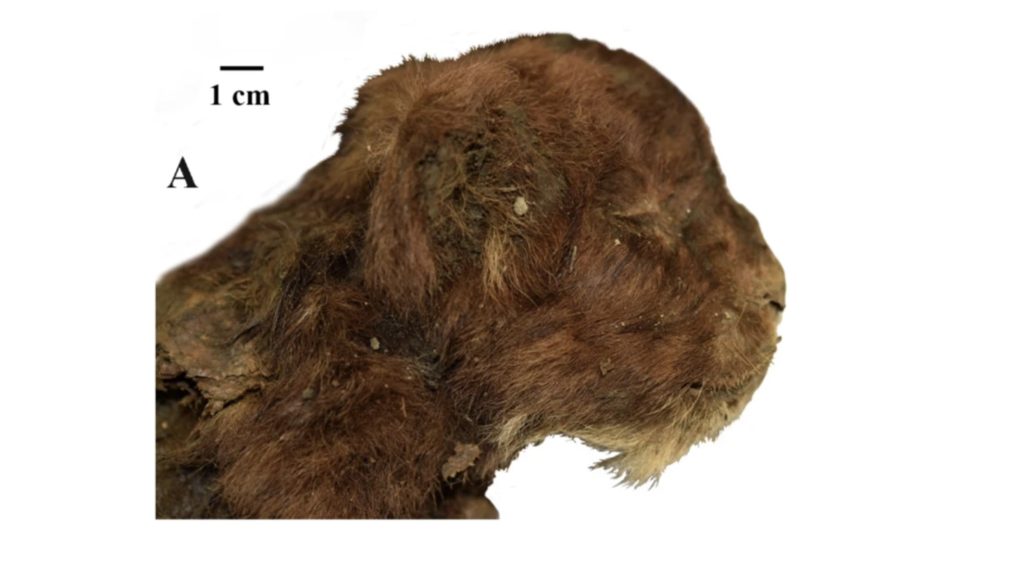
A tiny find in the permafrost of the Indigirka River basin of Siberia, Russia, is teaching paleontologists big lessons about what life was like 35,000 years ago.
The mummified remains of a saber-toothed cat were found four years ago. They were preserved by the icy soil. The kitten’s skull, spine, paws, and torso are all still covered in rich brown fur. The body is mostly intact, too. Since it was retrieved, scientists have run many tests. These include radiocarbon dating and DNA analysis. The kitten is a member of the species Homotherium latidens. It lived in the Late Pleistocene Era.
Researchers at the Russian Academy of Sciences reported on the kitten in the journal Scientific Reports. They said it’s the first time prehistoric remains of this quality have ever been studied.
The team compared the kitten’s body with a modern lion cub. They found key differences in the shape of the muzzle, the size of the mouth and ears, the length of its neck, and the color of its fur. Also of note was the region in which it was found. It was unearthed in northern Eurasia. Its presence there expands our knowledge of the wide range over which saber-toothed cats prowled.
Saber-toothed cats were apex predators. They lived throughout Asia, North America, and Europe. They hunted many different kinds of prey. They included caribou, mastodons, and wooly mammoths. The cat's numbers slowly dwindled as the Ice Age came to an end about 10,000 years ago.
Reflect: What fascinates you most about learning how animals lived in the distant past?
Photo of saber-toothed kitten from scientific report in Nature.com.
News brought to you by 
Read More News Stories Today!