

European Wildfires Move East, New Blazes Break Out in Washington State
August 3, 2026

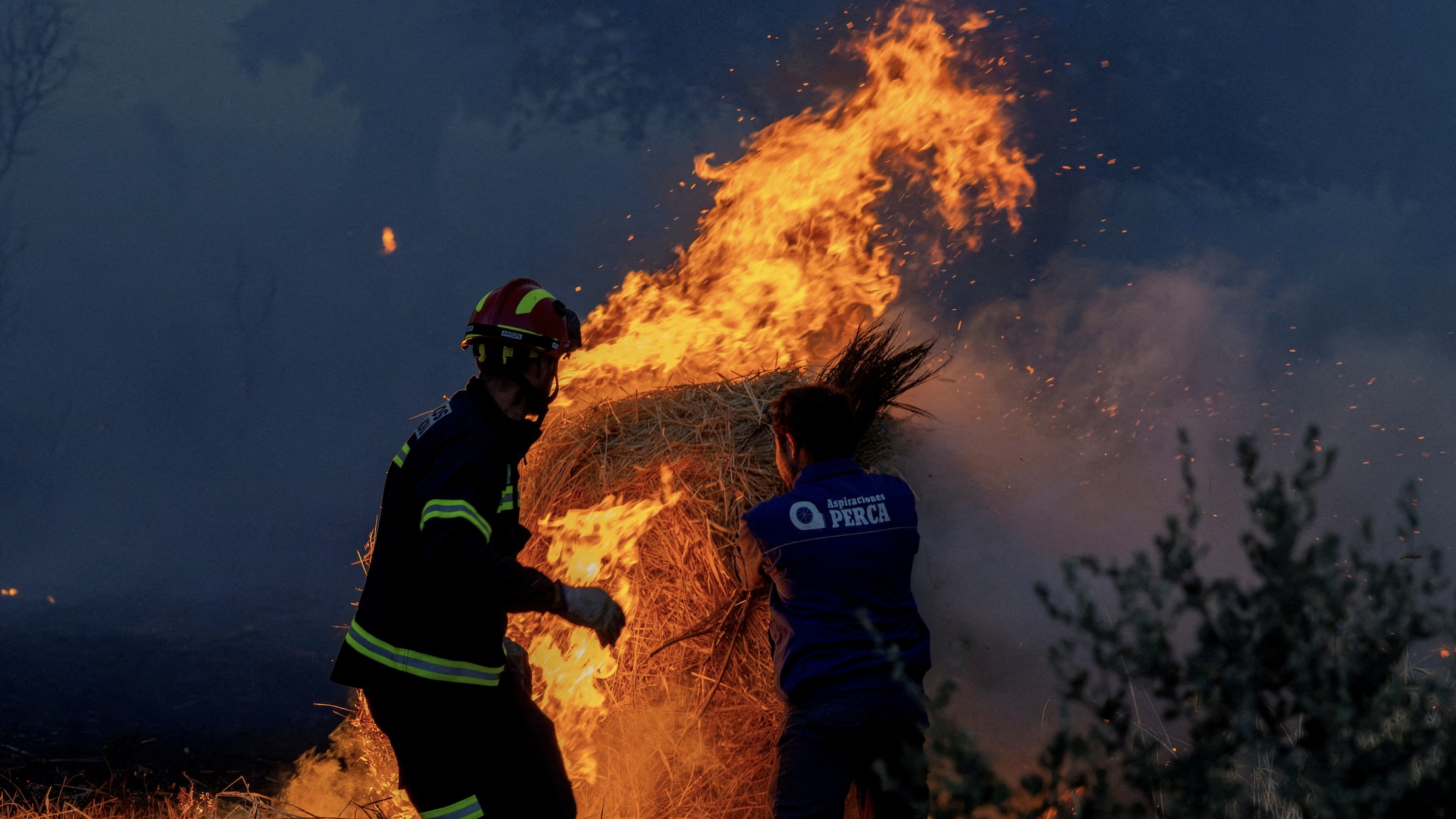
In the Pacific Northwest and Southern Europe, wildfires have scorched thousands of acres in recent days. They have forced mass evacuations. At least three Greek firefighters have died.
Fires have flared in Spokane, Washington, and Greece. The fires have been fueled by drought, dry fuels, heat, and wind. Those conditions are made worse by climate change, scientists say.
In Spokane, wildfires broke out Saturday. They were fed by high winds. They spread quickly towards residential areas. Authorities called for a state of emergency for many in the city of 230,000 residents. They posted: "Leave NOW! This may be your only notice."
In Greece, firefighters battled blazes also spread by gale-force winds. They broke out in Attica, Crete, and other regions. On Wednesday, two firefighters in Crete died. A third in the town of Gytheio was also killed by the fires.
To the west, in France and Spain, firefighters sought to prevent flare-ups from massive blazes they had just brought under control. France’s enormous Gironde fire was mostly handled. It had forced nearly 225,000 people to flee. It was perhaps the largest peacetime evacuation in the nation’s history.
The UNECE is the United Nations Economic Commission for Europe. It reported Thursday that so far this year, wildfires have scorched more than 1 million acres across Europe. They've burned 4.6 million acres in the US. They've also torched 9.3 million acres in Canada.
Paola Deda heads UNECE’s Environment and Forests Division. She issued a statement Thursday. She said our warming climate makes wildfires more common. “While emergency response remains essential," she wrote, "our greatest opportunity lies in prevention, sustainable forest management and building more resilient landscapes and communities.”
Reflect: When something unexpected disrupts a whole community, how do you think people can still show up for each other?
Photo of Spanish and French firefighters tackling wildfires in Spain from Reuters.
News brought to you by 
Read More News Stories Today!