
Renewable Energy Lesson: Global Energy
Lesson Plan
55 minutesGrades3, 4, 5Science, Social Studies, Mathematics
This resource has been reviewed by SubjectToClimate's climate scientists and verified for scientific accuracy and up-to-date information. Learn about our review process →
Written by Ashley Nelson, Lindsey Pockl
About this lesson
In this lesson, students use maps to compare renewable energy usage around the world. Students consider how using renewable energy can positively impact people’s lives.
Inquire: Students recall what they learned in previous lessons and use Google Maps to browse renewable energy projects around the world.
Investigate: Students research one or more countries and complete worksheets analyzing how much renewable energy is used in each country.
Inspire: Students watch a video on Iceland and geothermal energy, and discuss what life would be like if the United States used as much renewable energy as Iceland.
Preview the lesson plan
Better on a bigger screen? Open it in its own tab.View Lesson Plan
Everything you need to teach it
How to edit these materials (video)Teaching tips
Suggestions
- Students can study any country they want.
- This lesson can be extended so that all students complete the activity for more than one country.
- This lesson can be assigned independently or used as a substitute plan.
- Students can internalize that renewable energy solutions already exist all around the world. They simply must be scaled up in order to address the climate crisis.
Prerequisites
- This is lesson 5 of 6 in our 3rd-5th grade Renewable Energy Unit.
- Some students may struggle with the x-axis and y-axis scales when comparing different countries. The scales are not the same for all countries.
Differentiation
- Teachers can share the student worksheets digitally, or you can print hard copies.
- Teachers have many options in the Investigate phase of the lesson. Students can complete worksheets for individual countries, two countries, or multiple countries.
- Students can complete these worksheets individually or in groups. Students can also complete more than one worksheet if they finish early.
- Each one of the worksheets is also available in the adapted format to provide additional support. In these adapted worksheets, there are additional prompts to help students get started.
- Be sensitive with how you share the adapted worksheets with certain students. Students may realize that they have different worksheets from some of their peers.
- You can use this activity to teach students more about the UN SDGs.
- You can expand conversations about equity and justice with your students using the following resources:
If students would like to learn more about geothermal energy around the world, they can explore this interactive graph from Our World in Data.
From the scientist review
This lesson offers key insights for students to explore renewable energy, map countries' renewable energy sources, and analyze relative change and patterns. Students are able to compare and make recommendations for a just and fair transition to clean energy. All materials embedded in the lesson are thoroughly sourced and are void of scientific misconceptions. We recommend this lesson to be used for teaching.
Want this to fit your class?
Add your location for local examples, questions, and action ideas.
About the teacher writers
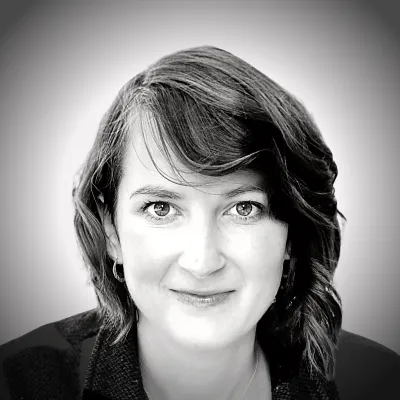
Ashley Nelson
K-2 Science and Technology Teacher
Ashley has been teaching for 16 years and has taught in Vietnam, Thailand, California, and Virginia. She is passionate about teaching STEM, computer science, and technology and empowering teachers to try new things in their classroom practice. She is also a certified Yoga and Mindfulness teacher and believes we must take care of our inner world to care for our external environment properly. She lives in Richmond, Virginia and loves vegan cooking, climate change activism, and connecting to the natural world.

Lindsey Pockl
Lindsey worked with SubjectToClimate to develop accompanying materials for lesson plans for grades 3-12.