
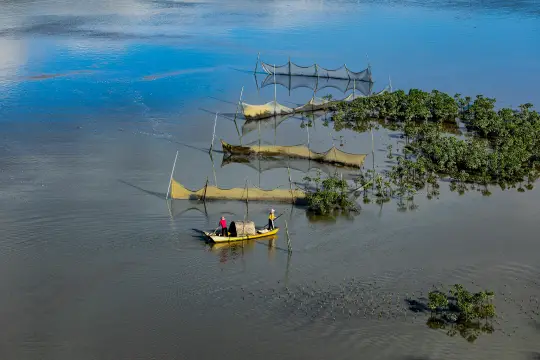
Traditional Fishing in the Colombian Amazon
Provided by: Mongabay Kids|Published on: May 7, 2026|Last updated: July 16, 2026
Grades: 4, 5, 6
Type: Articles/Websites
Subjects: Social Studies, Biology
Authors: Aimee Gabay
Location: South America
This resource has been reviewed by SubjectToClimate's climate scientists and verified for scientific accuracy and up-to-date information. Learn about our review process →
This resource has been reviewed by SubjectToClimate's climate scientists and verified for scientific accuracy and up-to-date information. Learn about our review process →
Synopsis
- This article describes the traditional fishing practices used by the Indigenous Macaquiño community.
- Students will understand how Indigenous fishing methods contrast with commercial fishing, and how traditional knowledge can support conservation efforts in one of the world's most biodiverse river systems.
Teaching Materials
Prerequisites:
- Use a world map to help students locate the Macaquiño community and compare this region with their local region.
- Introduce terms like Indigenous, ancestral, and lagoon.
Classroom Implementation:
- Have students take notes on each of the traditional fishing techniques and compare them with modern practices.
- Use this article as an entry point for discussions about Indigenous knowledge systems and environmental stewardship, particularly in units on biodiversity, ecosystems, or climate justice.
- Use as a paired reading with a scientific article about Amazon deforestation or freshwater biodiversity to give students both cultural and ecological perspectives on the same ecosystem.
Climate Change Connections:
- Stress the importance of fishing sustainably to maintain biodiversity, which may decline as the climate warms.
Sustainable Development Goals Connections:
- Make connections to Sustainable Development Goal 14, Life Below Water, through its focus on freshwater fish and sustainable fishing practices.
This webpage discusses the traditional fishing techniques of the Macaquiño community from the southeastern Colombian Amazon rainforest. In addition to the fishing techniques, the article discusses how the community lived in balance with the forest and the river, carefully protecting the environment while also meeting their needs. This resource supports conversations about sustainability and the importance of balancing resource consumption. The information presented is accurate, and this resource is recommended for teaching.
Teaching Tips
Standards
Resource Type and Format
Scientist Reviewed
This resource has been reviewed by SubjectToClimate's climate scientists and verified for scientific accuracy and up-to-date information. Our review process ensures that every resource in our library reflects the current state of climate science.
Learn about our review process →