

The Purple Sea Creature Destroying Pacific Kelp Forests
Provided by: Oregon Public Broadcasting|Published on: May 26, 2023|Last updated: July 16, 2026
Grades: 6, 7, 8, 9, 10, 11, 12
Type: Articles/Websites
Subjects: Biology, English Language Arts
Authors: Francisca Benitez
Location: Earth, North America, North America > United States, North America > United States > Oregon

This resource has been reviewed by SubjectToClimate's climate scientists and verified for scientific accuracy and up-to-date information. Learn about our review process →
This resource has been reviewed by SubjectToClimate's climate scientists and verified for scientific accuracy and up-to-date information. Learn about our review process →
Synopsis
- This video and article describe how increases in purple sea urchin populations are threatening important kelp forest habitat on the Oregon coast but that we can help bring the ecosystem back into balance.
- An imbalance in the ecosystem due to a decline in sea urchin predators is resulting in a population explosion, decimating their prey, seaweed, in kelp forests.
- Chefs and cooks in Oregon can play a part in rebalancing the kelp forest ecosystem by utilizing purple sea urchin in their recipes.
Teaching Materials
Positives
- This video shows a creative, non-scientific solution to an ecological problem by highlighting chefs who are combating an invasive species through their cuisine.
- Many students may connect to the notion that individuals can have an impact on local ecosystems simply by what they choose to eat, purchase, or where they choose to recreate.
Additional Prerequisites
- Learners should be familiar with invasive species and the cascading impacts they can have on ecosystems.
- The video and article are complimentary to each other and reinforce the same concepts of ecosystem imbalance and solutions to ecological issues.
Differentiation
- Before watching the video and reading the article, ask students if they think that chefs can help combat climate change and improve ecosystems.
- Have students research other creative solutions to reduce invasive species populations, such as fishing competitions for lionfish and cooking competitions utilizing invasive carp.
- Encourage students to research sustainable seafood sourcing and encourage them to order sustainably caught seafood or uni next time they dine out.
- Have students dig deeper on the reasons behind the decline of sea otters and sunflower sea stars in the Pacific Northwest and share their findings with the class.
- This article and video touch on many ecological topics such as population dynamics, predator-prey interactions, trophic cascades, invasive species, human activity, and habitat loss.
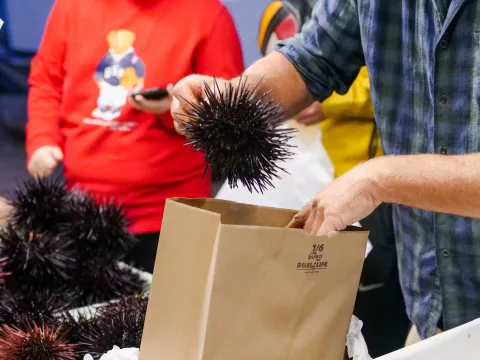
This video resource from Oregon Public Broadcasting focuses on the huge growth in the purple sea urchin populations on the Pacific coast and the harm these creatures cause to kelp forests. The video does a good job of explaining how hunting sea otters for their fur a century ago and climate change has largely removed the urchins’ natural predators, leading to a population boom. One partial solution to the overpopulation of purple sea urchin is presented, to eat them! This resource shows how chefs around Oregon are using uni in new and exciting dishes, rather than just serving it at the sushi bar. Interviews with researchers and chefs are featured, along with stunning views of the Oregon coast and delicious looking seafood. The video rightly closes with the fact that eating uni is only one part of a what must be a multifaceted plan to reduce purple sea urchin populations. This resource is recommended for teaching.
Teaching Tips
Standards
Resource Type and Format
Scientist Reviewed
This resource has been reviewed by SubjectToClimate's climate scientists and verified for scientific accuracy and up-to-date information. Our review process ensures that every resource in our library reflects the current state of climate science.
Learn about our review process →